Ketamine vs opioids Baltimore is a critical conversation for anyone living with chronic pain. For decades, opioids were the go-to prescription for chronic pain. Today, here in Baltimore and across the country, we are acutely aware of the devastating consequences of that approach. For patients living in daily pain, this has created a terrifying dilemma: how do you manage your pain without risking addiction? The answer lies in understanding a new class of treatments that work in a fundamentally different way. This guide will explain the difference between ketamine vs opioids baltimore.
This post explains the critical differences between opioids and IV ketamine therapy for chronic pain. A clear understanding of ketamine vs opioids baltimore is the first step toward safe and effective pain relief.
The Opioid Pathway: A Cycle of Tolerance and Dependence
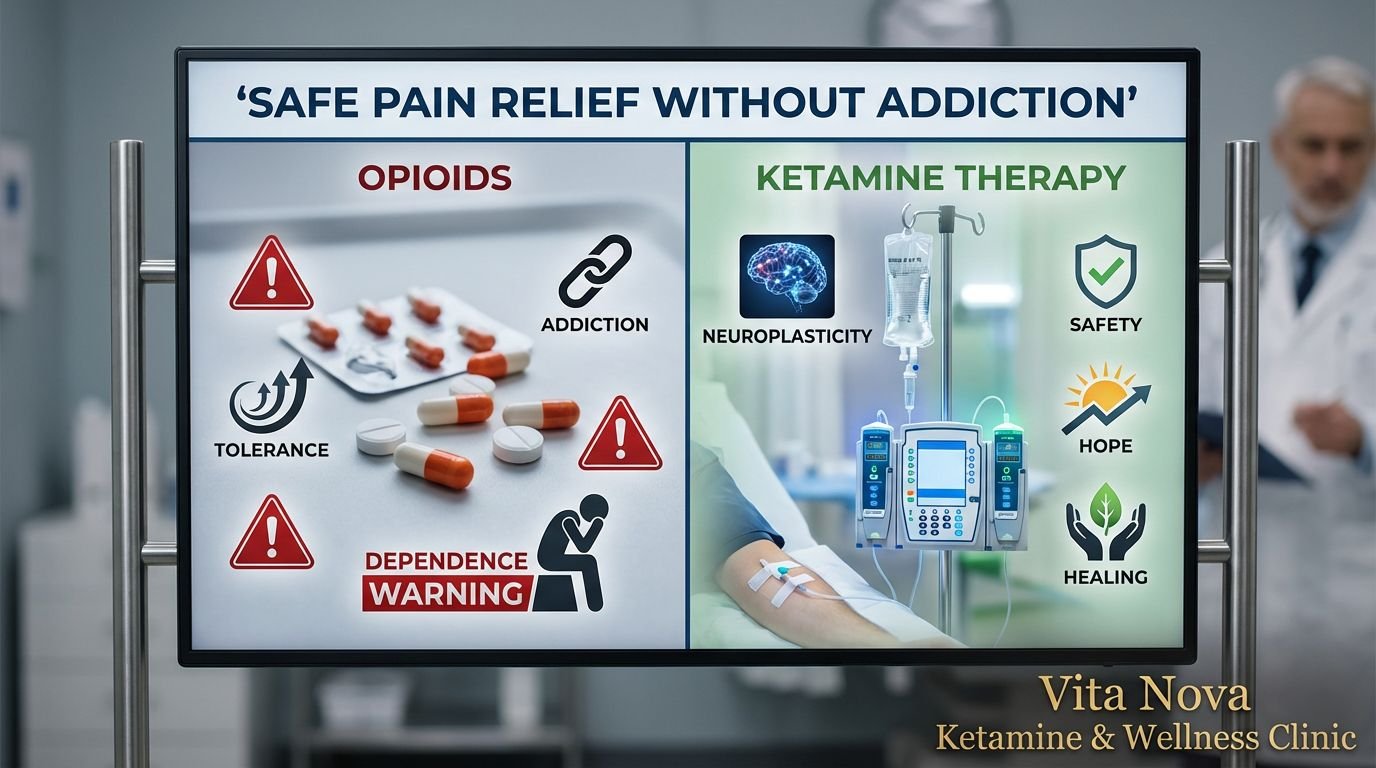
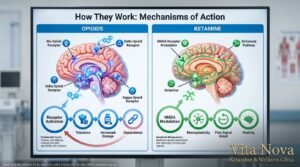
Opioids (like oxycodone or morphine) work by binding to opioid receptors in the brain, blocking pain signals and producing a euphoric “high.” This is a short-term solution. The problem is that over time, the brain adapts. You need higher and higher doses to get the same pain relief (tolerance), and your body becomes unable to function without the drug (dependence). This is the vicious cycle that leads to addiction. This is a key point in the ketamine vs opioids baltimore debate.
The Ketamine Pathway: Resetting the Pain Signals
Ketamine is not an opioid. It works on a completely different system by targeting NMDA receptors in the brain. For chronic pain patients, it acts like a “reboot” for the central nervous system, interrupting hypersensitive pain signals and reducing the “wind-up” phenomenon that makes pain chronic. It also promotes neuroplasticity, helping the brain form new, healthier pathways that don’t process pain so intensely. The crucial difference is this: Ketamine is not physically addictive. It does not create the same cycle of tolerance and dependence as opioids. It works to change the pain signaling, not just mask it. This is the most important takeaway when considering ketamine vs opioids baltimore.
A Side-by-Side Comparison: The Critical Differences
| Feature | Opioids (e.g., Oxycodone) | IV Ketamine Therapy |
|---|---|---|
| Mechanism | Binds to opioid receptors (masks pain) | Targets NMDA receptors (resets pain signals) |
| Addiction Risk | Extremely High | Not physically addictive |
| Treatment Goal | Short-term pain masking | Long-term reduction of nerve hypersensitivity |
| Administration | Daily oral pill (often unsupervised) | Medically supervised IV infusion series |
| Effect on Nerves | Can increase pain sensitivity over time | Can reduce nerve pain (neuropathy) |
A Baltimore Perspective on a National Crisis
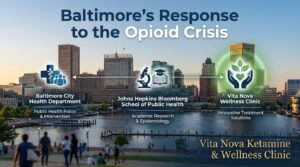
In Baltimore, we are on the front lines of the opioid crisis. The work being done by the Baltimore City Health Department and the addiction research at institutions like Johns Hopkins Bloomberg School of Public Health is vital. We are proud to be part of the solution by offering a powerful, non-opioid alternative that can help patients break free from the cycle of pain and dependence. This local context is crucial for understanding the importance of the ketamine vs opioids baltimore discussion.
Learn More About Ketamine for Chronic Pain
This article explains the fundamental differences between these two classes of drugs. To learn more about the specific conditions we treat (like Fibromyalgia, and Neuropathy) and the treatment protocol at our clinic, we urge you to read our complete Guide to Ketamine Therapy for Chronic Pain in Baltimore.
Frequently Asked Questions
Is ketamine safer than opioids for chronic pain?
When administered in a clinical setting by medical professionals, IV ketamine is a significantly safer long-term option for chronic pain than opioids because it is not physically addictive and does not carry the same risk of respiratory depression or overdose. This is a key differentiator in the ketamine vs opioids baltimore comparison.
How many ketamine infusions are needed for chronic pain?
A typical induction series for chronic pain involves a series of infusions over several weeks. The exact number and frequency depend on your specific condition and response to treatment. Our medical team will create a personalized plan for you.
Can I switch from opioids to ketamine?
Yes, many patients transition from opioids to ketamine under medical supervision. Ketamine can help manage withdrawal symptoms and provide effective pain relief as you taper off opioids. It is a critical part of the solution for many in the ketamine vs opioids baltimore dilemma.
Does insurance cover ketamine for pain in Baltimore?
Insurance coverage for ketamine for pain is evolving. We offer a free insurance concierge verification service to help you understand your benefits before you begin treatment.
Conclusion: A New Hope for a Life Beyond Pain
For chronic pain patients who feel trapped by the limitations and dangers of opioids, ketamine therapy represents a new hope. It offers a chance not just to mask pain, but to fundamentally change it, without the risk of addiction. This is the promise of a new approach to the ketamine vs opioids baltimore challenge.
If you are ready to explore a safe and effective alternative for managing your chronic pain, contact our Baltimore clinic for a medical consultation today.
$200 Referral Credit
When you refer a friend to our ketamine program, you both receive a $200 credit after they complete their induction series. It’s our way of saying thank you for spreading hope in the Baltimore community.